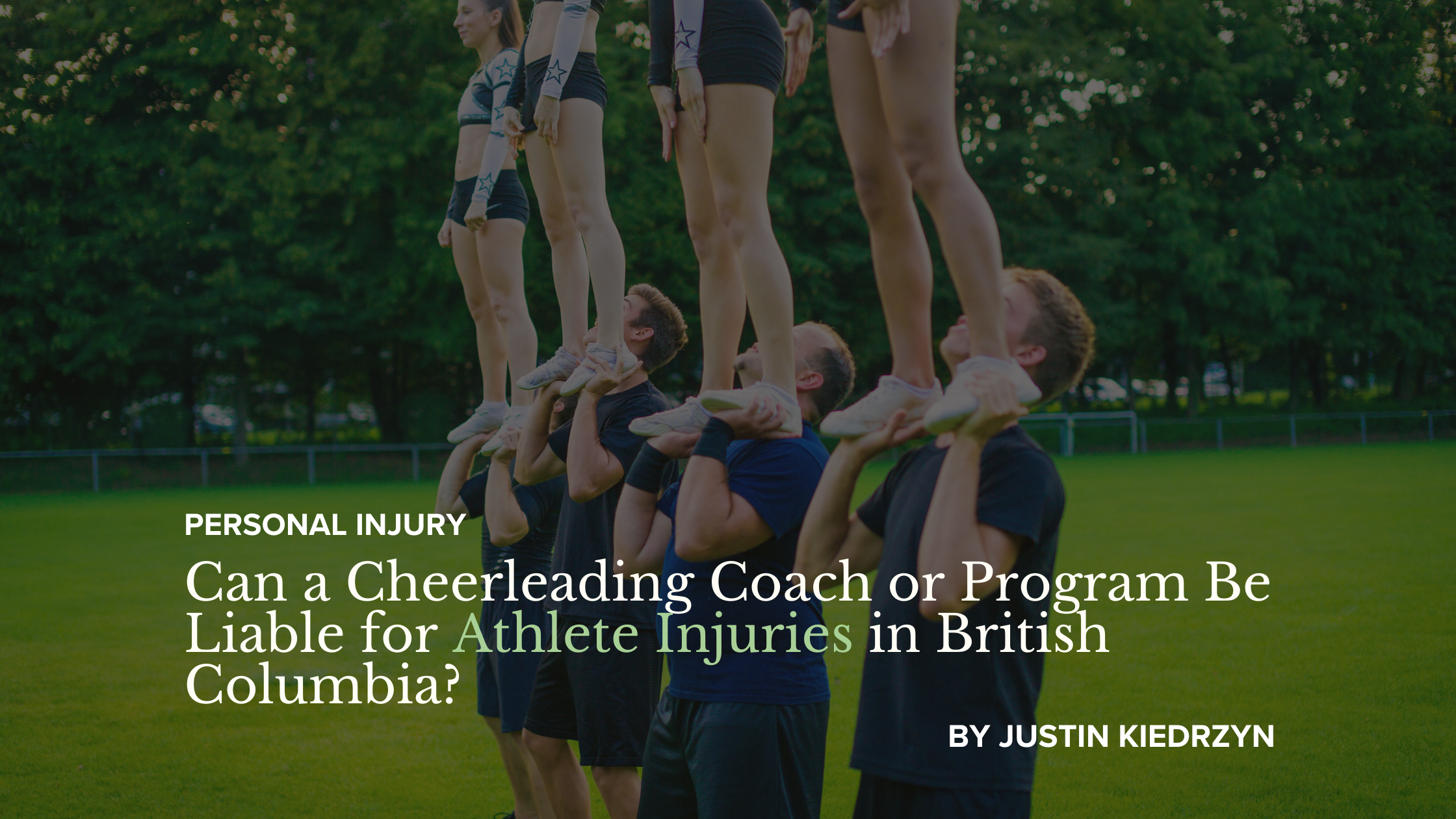
Can a Cheerleading Coach or Program Be Liable for Athlete Injuries in British Columbia?
Cheerleading is a growing sport with thousands of participants across Canada, including many youth and competitive athletes in British Columbia. As the sport continues to expand, athletes are pushing the limits of their training and performances with increasingly complex stunts, lifts, and tumbling passes. With this growth, however, comes an increased risk of injury. This raises an important question: when a cheerleader is injured, who bears legal responsibility? Are youth athletes themselves to blame, or can their coaches and the programs they train with be found negligent under British Columbia law?
Accidents can occur whether an athlete is attempting a new maneuver for the first time or performing a routine skill they have practiced countless times. Due to the physical nature of the sport, cheerleading injuries can range from relatively minor strains and sprains to far more serious injuries involving the head, neck, or spine that may require hospitalization. The possibility of significant injury means that both athletes and coaches must take reasonable steps to ensure that training environments are as safe as possible. Many factors can contribute to an accident, but with proper precautions, a large number of injuries can be prevented. When those precautions are not taken, questions of coach negligence, youth sports injury liability, and sports injury claims under Canadian negligence law may arise.
In cheerleading programs, safety often depends on a combination of proper preparation and adequate supervision. This can include ensuring that athletes complete appropriate warm-ups, that coaches are properly trained or certified, that athletes are taught safe spotting techniques during stunts, and that practices are conducted on appropriate mats or safety equipment. These types of precautions are generally considered part of a coach’s duty of care when supervising young athletes. When they are followed, they can significantly reduce the risk of injury. However, if these measures are overlooked or poorly implemented and an athlete is injured as a result, legal questions may arise regarding the responsibility of the coach or the cheerleading program.
Canadian courts have addressed the level of care expected from those supervising children and youth in athletic settings. In Myers v. Peel County Board of Education, the Supreme Court of Canada held that school authorities must exercise a standard of care comparable to that of a reasonably prudent parent. In that case, the Court concluded that the school authority failed to provide adequate supervision and safety precautions. At the same time, the plaintiff was found to be 20 percent contributorily negligent for attempting the maneuver without taking appropriate precautions. The decision continues to guide how courts evaluate issues such as negligent supervision, breach of duty of care, and contributory negligence in youth sports injury claims across Canada, including in British Columbia.
Athletes themselves may also share responsibility for their injuries in certain circumstances. If an athlete disregards their coach’s instructions or ignores established safety protocols, a court may find that they contributed to their own injury. Factors such as the coach’s supervision and instructions, the athlete’s level of experience, and whether safety procedures were clearly communicated and followed can all play an important role in determining liability.
Ultimately, whether a coach or cheerleading program can be held liable for an injury in British Columbia will depend on the specific circumstances of the incident. Courts will consider whether the coach or organization breached their duty of care by failing to provide adequate supervision or appropriate safety measures, and whether the injured athlete played a role in causing the accident. Determining liability in a cheerleading injury claim requires a careful assessment of the facts and the application of Canadian negligence law.
Disclaimer: This content is provided solely for informational purposes and is not intended for use in any legal proceeding. You should consult a qualified lawyer for advice tailored to your specific circumstances.
